Kink Communities: Beyond the Stereotypes
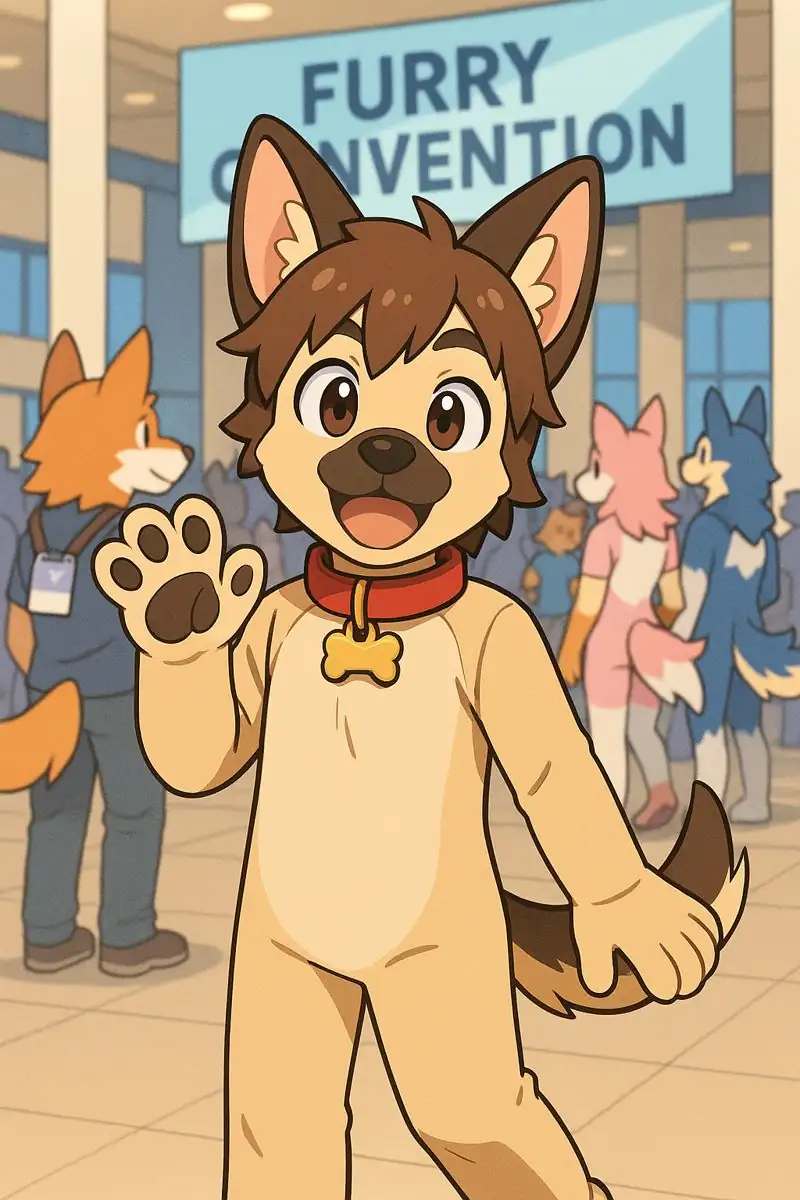
A Major UK Study Reveals Some Surprising Facts About Kink Communities
Media portrayals of niche sexual interests like BDSM, pet play, and furries often lean into sensationalism, painting participants as psychologically deviant or driven by singular, extreme fetishes. These stereotypes, while dramatic, rarely reflect the lived experiences of people within these communities. This leaves a significant gap between public perception of kink communities and reality.
A recent scientific investigation, “A Survey of the United Kink-dom,” offers a rare, data-driven look into these worlds. Published in The Journal of Sex Research, this study surveyed 470 UK-based participants involved in five distinct interest groups:
- BDSM
- Age play
- Pet play
- Furries
- Balloon fetishists
The research provides one of the most comprehensive datasets to date on the demographics, psychology, and behaviors of these communities.
This article distills the five most surprising and stereotype-busting findings from this rigorous research. By moving past the hype and focusing on the evidence, we can begin to build a more nuanced and accurate understanding of kink communities and their members.
1. Most People Are Into More Than One Thing
Contrary to the idea that people belong to distinct and separate fetish groups, the study found a very high degree of overlapping interests. The data shows that having a single, isolated interest is actually the exception, not the rule.
Only 19% of the 470 participants reported having just one of the five paraphilic interests investigated. The majority had two (37.8%) or three (31.5%).
This finding is significant because it suggests these interests are not isolated quirks. They are often part of a broader exploration of non-normative identity and sexuality. The researchers identified specific patterns of co-occurrence.
For instance, there was a strong link between pet play and furry interests. This makes sense due to their shared themes of animal personification. Similarly, BDSM, which is defined by power dynamics, showed significant overlap with pet play. This is another of the groups in the study that centrally involve power exchange roles.

2. Kink Communities Deviate Sharply from Population Norms
When the researchers compared their sample to UK national statistics on sexual orientation and relationship styles, they found dramatic differences.
Across all five groups studied, participants reported significantly lower levels of heterosexual identity and much higher rates of gay/lesbian and bisexual identities than the general population.
For example, while 94.6% of the UK population identifies as heterosexual, the rate within the BDSM group was just 37.8%.
The study also found substantially higher rates of non-monogamy compared to population estimates. A 2.4% rate from a representative Canadian sample was used as a benchmark in the absence of equivalent UK data.
This finding supports a growing body of research suggesting these communities often function as welcoming spaces for individuals whose identities and relationship models are marginalized elsewhere. The study’s authors summarize the scale of this difference concisely:
Findings demonstrated groups differed significantly from population patterns of sexual orientation and relationship style, with effect sizes for these comparisons being large.
3. The “Psychopathic Dominant” is a Myth
A persistent and damaging stereotype suggests that individuals who enjoy dominant roles in BDSM must harbor “darker” personality traits. These traits inlcude:
- Narcissism
- Machiavellianism
- Psychopathy
This idea pathologizes practitioners by linking consensual power exchange with antisocial characteristics.
The “United Kink-dom” study directly tested this hypothesis by measuring these “Dark Triad” traits across different BDSM role identities:
- Dominant
- Submissive
- Switch (individuals who enjoy both roles)
The results were definitive: there were no significant differences in Dark Triad traits based on BDSM role.
People who identified with dominant roles did not score higher on measures of Machiavellianism, narcissism, or psychopathy than those in submissive or switch roles. This finding provides strong empirical evidence that debunks a harmful myth and supports previous research showing that BDSM practitioners generally have mental health profiles comparable to the general population.
Are you a professional looking to stay up-to-date with the latest information on, sex addiction, trauma, and mental health news and research? Or maybe you’re looking for continuing education courses?
Stay up-to-date with all of Dr. Jen’s work through her practice’s newsletter!

4. The Study Found Little Support for the Most Damaging Stereotypes in Kink Communities
The study carefully and sensitively investigated the most stigmatizing stereotypes the links between
- Age play and pedophilia
- Pet play/furries and zoophilia
The researchers’ goal was to see if these consensual adult role-playing activities were being used as a substitute for harmful, non-consensual interests.
The findings were more complex than a simple “myth-busted” headline would suggest.
For age play, the data showed that the vast majority of participants did not report any pedophilic arousal. However, a minority (14.1%) did report some level of arousal to pedophilic fantasy.
The researchers provide crucial context, noting that while their data “largely does not support stereotypes,” this rate of self-reported arousal is higher than the estimated prevalence of pedophilia in the general population (up to 5%).
A similar pattern emerged for pet play and furries within Kink Communities.
While most participants in these groups expressed “repulsion” to the idea of sex with animals, a minority reported some arousal to zoophilic fantasy (23.6% of pet players and 28.9% of furries).
Again, the researchers note that these rates are higher than the general population estimate for zoophilia (up to 8%).
For the overwhelming majority, consensual adult role-play is distinct from harmful acts, but the data reveals a nuanced reality that defies simple caricature.
5. Kink Can Be a Non-Sexual Identity
A common assumption is that participation in kink communities is always and exclusively about sexual gratification. However, the study’s data challenges this idea, revealing that for many, these interests are a multifaceted part of their identity that isn’t always tied to sex.
A significant minority of participants, particularly among pet players and furries, reported that they did not pair their interests with sexual acts.
Across the groups, “10–35% reported never pairing this with sex,” with furries (35.1%) and pet players (26.7%) being the most likely to engage non-sexually. Furthermore, when asked how much they viewed their interest as part of their “sexual orientation,” the study found a “bimodal distribution.”
This means participants tended to answer at the extremes: many saw it as absolutely central to their sexual identity, while many others saw it as not at all important.
This highlights that for a substantial portion of these communities, the appeal is not primarily sexual. Instead, it lies in social connection, psychological expression, and creative world-building – crystallized in practices like developing a detailed “fursona,” or animal character, which can be entirely separate from sexual gratification.
A More Complex Picture of Kink Communities
The “A Survey of the United Kink-dom” study provides a powerful, evidence-based counter-narrative to the prevailing stereotypes about kink communities.
The findings paint a picture of a world that is far more diverse, psychologically comparable to the general population, and less pathological than often portrayed.
It reveals communities that are highly interconnected, disproportionately queer and non-monogamous, and driven by a wide range of motivations that often extend well beyond sex.
This research underscores that the lived reality of people with non-normative sexual interests is more complex and far more human than caricature allows. As data replaces caricature, the central question is no longer if these communities are pathological, but how their complex networks of identity, creativity, and non-normative relationships challenge our broader cultural definitions of sexuality itself.
Be Part of the Kink Community Conversation
Do you participate in a kink community? How do you view kink communities? Drop a comment below and tell me about your non-explicit experiences!

Have you found yourself in legal trouble due to your sexual behavior? Seek assistance before the court mandates it, with Sexual Addiction Treatment Services.


Are you looking for more reputable data-backed information on sexual addiction? The Mitigation Aide Research Archive is an excellent source for executive summaries of research studies.

February 27, 2026 @ 5:49 pm
@jenniferweeks
Terrific reading, good overview of the study, thanks!
BTW, the fact that this is a Mastodon post AND a website article page, is so damn genius.
Remote Reply
Original Comment URL
Your Profile
Why do I need to enter my profile?
This site is part of the ⁂ open social web, a network of interconnected social platforms (like Mastodon, Pixelfed, Friendica, and others). Unlike centralized social media, your account lives on a platform of your choice, and you can interact with people across different platforms.
By entering your profile, we can send you to your account where you can complete this action.
February 27, 2026 @ 6:50 pm
@jenniferweeks
Kink is so often incredibly misunderstood!!! I really hope that more research is done on kink respectfully. I'd also argue that zoophilia may be more common than people believe, but because of the stigma associated with the subject people are reluctant to admit they are into it. Same with pedophilia.
I think we need to be having more open discussions about what we can do to better understand paraphilic behaviour and how we can better help these people. I strongly believe there is a difference between condoning paraphilic behaviour and trying to help someone who has certain desires that are harmful to others.
Remote Reply
Original Comment URL
Your Profile
Why do I need to enter my profile?
This site is part of the ⁂ open social web, a network of interconnected social platforms (like Mastodon, Pixelfed, Friendica, and others). Unlike centralized social media, your account lives on a platform of your choice, and you can interact with people across different platforms.
By entering your profile, we can send you to your account where you can complete this action.